Resources
The method, written down.
Practical thinking on value selling, alongside guides to the product.
25 resources

Field notes
AI Is All Over Sales. The Results Aren't Moving.
Sales teams pointed AI at admin work and outbound volume, and buyers learned to tune it out. The lever that moves revenue is the one most teams skipped: the business case, where deals actually stall.

Field notes
"No Budget" Usually Means Nobody Has Made the Case Yet
Budget isn't found. It's allocated, to the problems with the strongest case behind them. When a buyer says there's no budget, the real question is whether anyone has given finance a reason to move money.

Field notes
What an AI value engineer does, and what it can't do
An AI value engineer can draft a case for your team. It can't approve the claim, and it isn't a person you have to hire.
Field notes
In 2027, the Deal Goes to Whoever Can Explain the Value.
AI budgets are rising and patience is shrinking. The CFO is in the room, and 'trust us' no longer closes. The seller who can explain the value wins.

Field notes
Everyone Bought AI for Sales. Almost No One Can Say What It Bought Them.
Sales organizations have adopted AI almost everywhere. The returns they can point to are mostly hours saved. The next year belongs to the leaders who can turn that into a case a buyer believes.
Field notes
What business case generation for software sales has to include
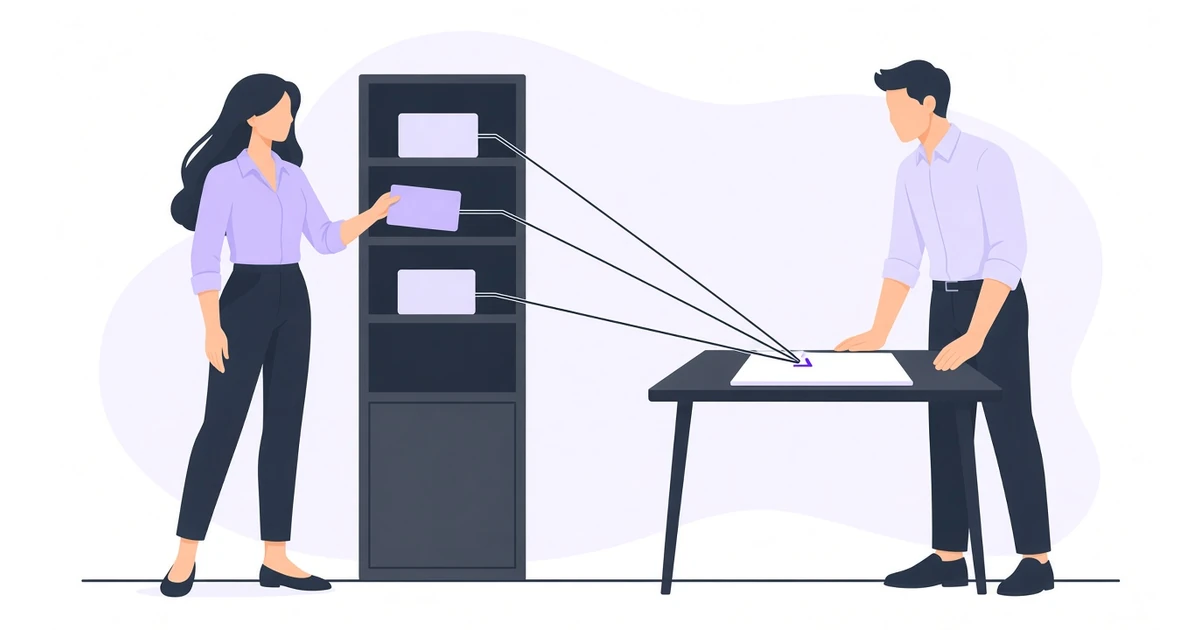
Business case generation for software sales is easy to start. A case your champion can send shows its assumptions, one argument, and a projection rather than a result.
Field notes
How AI value selling works when the case has to hold
AI value selling drafts from claims your team has approved, then projects one case the buying group can share. The case is a projection.

Field notes
How to choose value selling software
Value selling software differs on approval, reuse, and the arithmetic. Here is what to ask every vendor, including Serre, and who Serre isn't for.

Field notes
Why your CFO doesn't trust your ROI model
Finance looks for the source, the formula and a range. A vendor slide that asks to be trusted does not give them any of those. A case is a projection, not a result.

Field notes
The death of the vendor pitch deck
Buyers already expect a business case. A deck that restates the pitch does not give them one they can examine. The replacement is a projection with the assumptions showing.

Field notes
Stop defending a number. Present a range.
A single ROI number is either too large to believe or too small to justify. Show a conservative, expected and upside case from bounds a reviewer can see. The same inputs give the same result.

Field notes
How to build a business case your champion can defend
Your champion has to explain the purchase without you in the room. Give them a model they can open, not another vendor deck. One argument for the group, and a projection rather than a result.
Documentation
How Serre calculates ROI
Every number in a Serre business case comes from transparent math you can read — formulas with inputs you control. The AI helps you draft formulas, suggest inputs, and write the narrative, but you review every value before it lands in the case.
Documentation
Meet Val, your value-engineering copilot
Val is the AI copilot built into Serre. Wherever you see the Val button, click it (or press ⌘J / Ctrl+J) to open a chat panel beside the page. Describe what you want in plain language and Val drafts it or makes the change — a value driver, a formula change, a profile edit — and tells you what it did. The page stays usable while the panel is open.
Documentation
What is a business case?
A business case is the deliverable Serre exists to produce: a quantified, defensible answer to the question every buyer eventually asks — "what is this actually worth to us?"
Documentation
What is a value driver?
A value driver is a single, measurable way your product creates value for a buyer — for example "Reduced Manual Billing Time" or "Lower Infrastructure Spend". It's the building block of every business case.
Documentation
Build a business case
When you finish, you'll have a calculated, reviewed business case for one account, ready to export or share. The case walks you through eight steps, shown across the top: Company, Account, Case Profile, Drivers, Inputs, Calculate, Val Review, and Deliver.
Documentation
Build a value driver
This guide walks you through the Driver Studio — one editor for creating and refining the formulas that power your business cases. New here? Read What is a value driver? first.
Documentation
Create an account
An account is a company you sell to: a prospect or an existing customer. Get the profile right and every business case for that account starts from solid ground. This takes about two minutes with the website analyzer.
Documentation
Export and share a business case
When you finish this guide, your buyer has the case in hand — as a document, a private link, or both — and you're ready for the conversation.
Documentation
Manage your solutions
Solutions are the products you sell. Keeping them well-described pays off everywhere downstream: value drivers map to them, and business cases group benefits under them. This guide covers adding, editing, and organizing your portfolio in Solutions.
Documentation
Manage your team and plan
Everything account-related lives under Settings: your profile, your teammates, and your plan's allowances.
Documentation
Set up your company profile
Your company profile is the foundation everything else builds on — solutions, drivers, and business cases all inherit context from it. This guide shows you how to create and maintain one in Companies.
Documentation
Common questions
Quick answers to the issues and questions we hear most. Each entry: what you're seeing, why, and what to do.
Documentation
Serre Connect tool reference
Every tool your assistant can use once it is connected to Serre, with the exact arguments each one takes. This page is generated from the connection itself, so it always matches what your assistant actually sees.